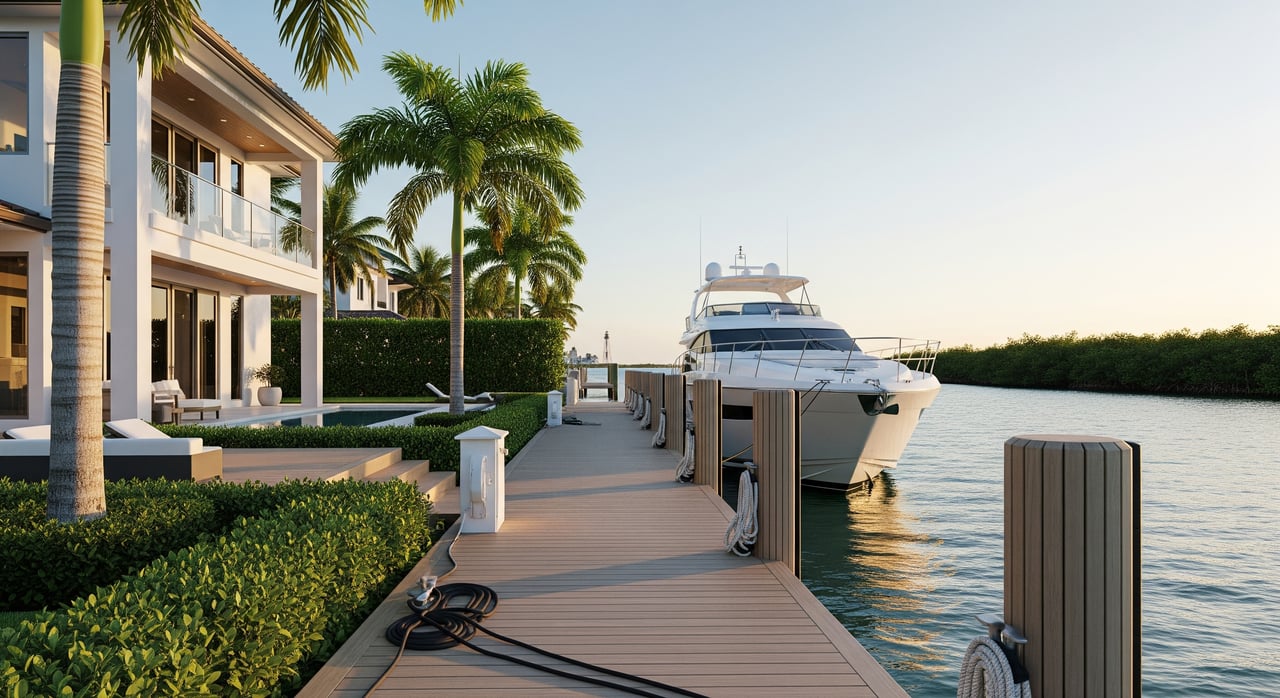
Love the idea of stepping off your patio and cruising to the sandbar or offshore in minutes? If you boat in Jupiter, you know the right neighborhood makes all the difference. The tricky part is matching your vessel to real-world details like bridge clearances, canal width, dock type, and HOA rules.
This guide shows you how to evaluate a property through a boater’s lens so you avoid surprises after closing. You’ll learn how to confirm bridge heights, gauge maneuvering room, assess docks and permits, and estimate travel time to Jupiter Inlet.
Let’s dive in.
Start with your boat’s profile
Before you look at homes, confirm your boat’s key dimensions. Focus on overall length, beam, draft, displacement, and especially air draft. Air draft is the height from the waterline to your highest point, including antennas and radar. That number dictates which bridges you can clear.
Measure your boat in cruising configuration, not on paper. Then add a safety margin. If your air draft is close to a published bridge clearance, treat it as marginal and keep looking.
Check bridge clearances to the inlet
Jupiter routes often include canals and the Intracoastal Waterway on the way to Jupiter Inlet. Any fixed bridge on that route must clear your boat with room to spare. Published clearances are tied to a tidal datum, commonly Mean High Water, so the actual clearance changes with the tide.
- Verify the bridge’s published height using NOAA nautical charts.
- Check for temporary changes or work updates in the U.S. Coast Guard Local Notice to Mariners.
- If you need specifics on a particular structure, review the U.S. Coast Guard bridge information and confirm the bridge type and operations.
If your clearance is tight, time your passage with tides and confirm the datum used on the chart. When in doubt, call the bridge authority or a local harbormaster for current conditions.
Evaluate canal width and turning room
Narrow canals can make every docking a white-knuckle event. You want enough fairway to approach calmly, pass neighbors, and turn without drama.
- Comfortable fairways are generally wider than 40–50 feet for typical powerboats. Wider is better as boats get larger.
- Turning basins ideally offer room equal to roughly 1.5–3 times your boat length to make an easy one-pass turn.
- Side-tie docking is often easier in narrow canals than backing into a finger-slip.
Walk the shoreline and look for clear channel edges, existing turning basins, and overhead obstructions. Ask about dredging schedules, shoaling, and typical wind direction. Red flags include dead-end canals with no turning area and reports of frequent towing assistance.
Match dock type and infrastructure
A beautiful house is only half the equation. The dock must fit your boat and your routine.
- Dock type: Fixed docks are stable but can sit high above the water. Floating docks rise with the tide and simplify boarding.
- Slip fit: Confirm usable length and width against your LOA and beam. Leave room for fenders.
- Pilings and hardware: Check piling diameter, spacing, condition, and cleat layout. Older docks may not be rated for heavier boats.
- Utilities and access: Verify shore power amperage, water, and safe walkway slope. Consider the distance from parking to dock for loading gear.
Ask the seller for maintenance records, permits, and any inspection reports. Replacement or upgrades can need county and state approvals and may require environmental considerations.
Understand HOA rules, permits, and insurance
Every association is different. Read for the details that matter to boaters.
- Slip ownership and transfer: Are slips deeded to the lot or assigned by the HOA? Are they transferable at sale? Any waitlist?
- Usage rules: Limits on guests, rental of slips, working hours for contractors, or onboard maintenance.
- Costs and responsibilities: Who pays for seawall repairs, dredging assessments, and insurance? Are minimum liability limits required?
Permits and riparian rights are critical. Private docks in Florida typically involve county permits and sometimes state approvals over submerged lands. Confirm status with the county and state before you commit.
- Review dock and seawall permits with Palm Beach County’s building and environmental teams. Start with the Palm Beach County Building Division and Environmental Resources Management.
- For state rules and Environmental Resource Permitting, check the Florida DEP program.
Estimate travel time to Jupiter Inlet
A quick run to the inlet is part of the Jupiter lifestyle. To estimate your time, measure nautical miles from the property to the inlet, divide by your cruising speed in knots, and adjust for slow zones and traffic.
- Travel time formula: time in hours equals distance in nautical miles divided by speed in knots.
- Factor in no-wake zones, possible bridge waits, current, and weekend traffic.
- Use tide predictions for the inlet and plan entries and exits during favorable currents. Check NOAA tide and current predictions.
Ask nearby captains or marina managers how long the run takes in typical conditions. Nothing beats local knowledge.
Local conditions to plan for
Jupiter Inlet is dynamic. Tides and currents can be strong, and shoaling or channel changes can affect your route.
- Refer to NOAA charts and tide data for the latest charted features.
- Review temporary channel changes in the USCG Local Notice to Mariners.
- Environmental protections matter here. Seagrass and manatee considerations can affect dock design, fueling, and anchoring. See the Florida DEP guidance.
County or state dredging projects and channel maintenance can change depths and usable width. Check updates through Palm Beach County environmental resources and local marina managers.
A simple shortlist method
Use this checklist to score each home and keep emotions in check. Assign 1–5 for each category. If a property fails a must-have, drop it.
- Vessel fit – mandatory
- Dock length fits LOA with a margin. Canal and bridges accommodate your beam and air draft with a safety buffer.
- Access and maneuverability – high
- Canal width and turning room feel comfortable in typical wind and current.
- Dock type and condition – high
- Structure and pilings are sound, or you have a clear, permitted plan to upgrade. Utilities meet your needs.
- Legal and administrative – high
- Slip ownership and transfer are clean. HOA rules align with how you plan to use your boat. Permits are current.
- Travel time and operating windows – medium
- Estimated run to Jupiter Inlet fits your lifestyle. You understand no-wake zones and bridge timing.
- Services and logistics – medium
- Fuel, haul-out, and mechanics are convenient along your route.
- Environmental and local risk – medium
- Shoaling history and dredging plans are acceptable. Seasonal traffic won’t disrupt your routine.
- Insurance and costs – medium
- HOA fees, assessments, and required insurance limits fit your budget.
Before you go under contract, hire a marine surveyor or dock inspector, confirm permits with the county and state, speak with the HOA or marina manager, and consider a boat trial with a local captain.
How to find dockage-ready listings
MLS systems let you filter for waterfront features. Use keywords such as “private dock,” “deep water,” “boat lift,” and “no fixed bridges.” Request from the listing agent: dock length and width, piling specs, permit copies, and photos shot from the waterline.
Inventory changes fast, so ask for a curated shortlist that fits your vessel. Share your LOA, beam, draft, and air draft up front. If you are early in the process, a saved search and quick consult can save weeks of touring the wrong homes.
Local experts and official resources
- Charts and tides: NOAA nautical charts and NOAA tide and current predictions
- Notices and bridges: U.S. Coast Guard Local Notice to Mariners and the USCG bridge information page
- Permitting: Florida DEP Environmental Resource Permitting and Palm Beach County Building Division
- Water management and environmental guidance: South Florida Water Management District
Your next step
Choosing the right waterfront home in Jupiter starts with a clear plan and the right local guidance. Share your boat’s specs and wish list, and we’ll help you narrow the neighborhoods that truly fit your vessel and lifestyle. From due diligence to closing, we coordinate the details so your first run to the inlet feels easy.
Ready to find your boat-friendly home in Jupiter? Reach out to Sommar Clark for a curated shortlist and on-the-water guidance.
FAQs
What is air draft and why does it matter in Jupiter?
- Air draft is the height of your boat above the waterline, including antennas and radar. It determines whether you can pass under fixed bridges on the way to Jupiter Inlet.
How do I verify a bridge’s real clearance on my route?
- Compare your measured air draft to published bridge clearance on NOAA charts and check the USCG Local Notice to Mariners for any temporary changes.
How wide should a canal be for a 35–45 foot boat?
- There is no single rule, but many boaters prefer fairways wider than 40–50 feet and a nearby turning basin sized to about 1.5–3 times boat length for easy maneuvering.
Do dock and seawall permits transfer when I buy?
- Not always. Confirm permit status and transferability with Palm Beach County and the Florida DEP Environmental Resource Permitting program before you commit.
How can I estimate run time to Jupiter Inlet from a property?
- Measure nautical miles to the inlet, divide by your cruising speed in knots, then adjust for no-wake zones, bridge timing, current, and traffic. Use NOAA tide predictions to plan favorable windows.
