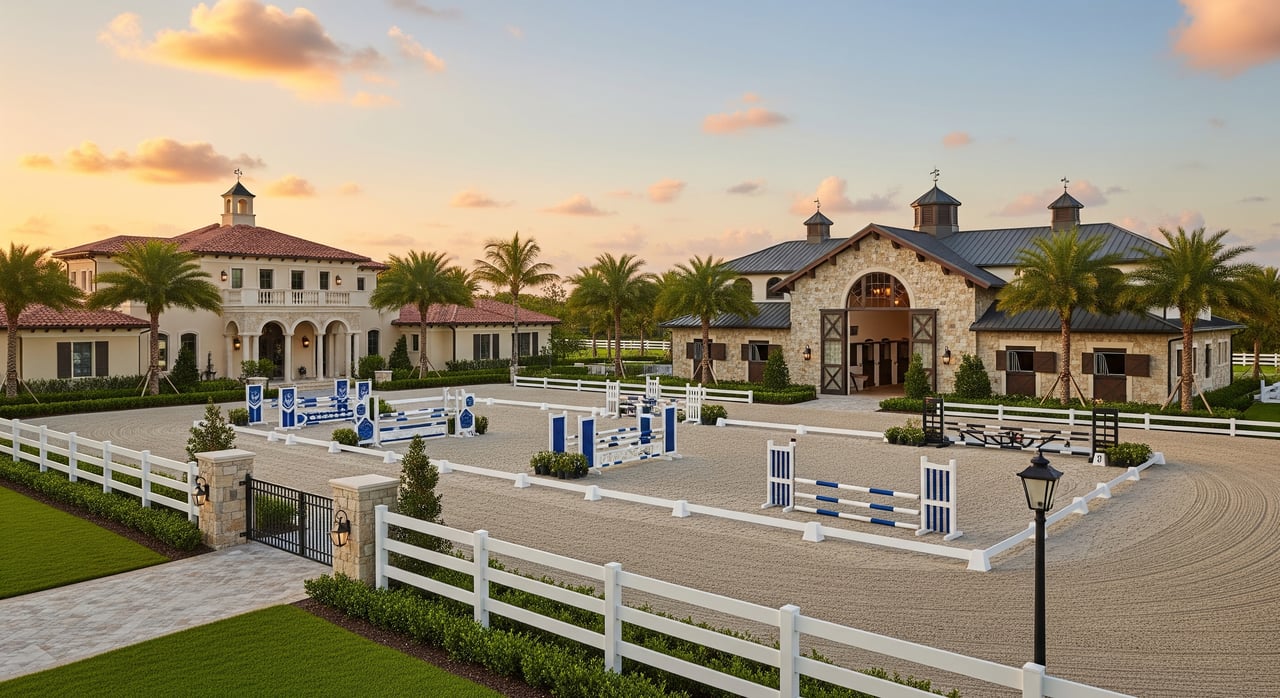
Buying an Equestrian Property in Wellington, Florida
A practical, local guide for riders who want their farm to actually work.
If you’re dreaming about riding from your own barn to the show grounds in minutes, let’s slow that dream down for just a second — in a good way.
Because in Wellington, the right equestrian property isn’t just about a pretty farmhouse and a Pinterest-worthy barn aisle. It’s a full system. Drainage. Soils. Water table. Stall airflow. Trailer access. Zoning. Insurance. The way your horses actually live day to day.
And if you’re buying in Palm Beach County, especially near Palm Beach International Equestrian Center, those details matter more than almost anywhere else in the country.
So let’s walk through this the way I would if we were touring farms together.
1. Start With Your Program — Not the Barn Aisle
Before you fall in love with a center aisle, ask yourself:
How will you actually use this property?
Your program drives everything — acreage, layout, parking, arena size, even insurance.
✨ Lifestyle Setup (1–5 acres)
-
1–4 horses
-
Rotational turnout
-
Sacrifice paddock for wet months
-
Owner-managed operation
This works beautifully here — but only with smart paddock planning.
🐎 Training or Boarding Focus (5–20 acres)
-
Multiple paddocks
-
Dedicated ring space
-
Trailer parking
-
Staff workflow areas
This is common in Wellington and gives you flexibility for season.
🏆 Larger Operations (20+ acres)
-
Full-scale turnout
-
Staff housing circulation
-
Larger parking zones
-
Event-level logistics
Inventory at this size is limited. When it hits the market, it moves.
And here’s something buyers often miss:
Layout matters as much as acreage.
You want:
-
Clear trailer flow (no tight backing)
-
Room for proper arena dimensions
-
Space to rotate paddocks without destroying grass
2. Drainage & Water Table — This Is the Big One
Wellington is flat. Beautiful. Green. But flat.
The water table here can make or break a farm.
Before you buy, you need clarity on:
-
Seasonal high water levels
-
Grading and fill quality
-
Historic ponding
-
Septic performance
-
Arena base construction
If you’re altering drainage or adding water-control structures, you may need review from the South Florida Water Management District.
And yes — flood zones matter. Check FEMA maps early, especially if you’re financing.
Also think practically:
-
Can feed trucks turn easily?
-
Do gates handle large rigs?
-
Is there hardstanding where you need it?
These are daily workflow details — not glamorous, but critical.
3. Barn Design That Works in South Florida
This climate demands smart design.
Ventilation Is Non-Negotiable
-
Cross-ventilation
-
Ridge vents
-
High eaves
-
Shade orientation
Open-air barns are common here for a reason.
Stall Size
-
10x10 to 12x12 is typical for performance horses
-
Larger for broodmares or warmbloods
Flooring & Aisles
-
Non-slip
-
Good drainage
-
Proper expansion joints if concrete
Support Spaces That Actually Function
-
Hot + cold wash racks
-
Separate feed and laundry
-
Secure tack rooms
-
Safe electrical distribution
You feel the difference between a barn that was designed for Instagram… and one designed for actual Florida summers.
4. Arenas & Footing in Wellington
Your footing needs to match:
-
Your discipline
-
Your maintenance bandwidth
-
Your budget
Common footing types:
-
Sand
-
Sand-fiber
-
Wax-coated blends
-
Composite systems
Covered arenas? Wonderful. But they must meet Florida wind codes.
If you’re near show season traffic, proximity to Palm Beach International Equestrian Center can reduce horse stress and staff strain significantly.
Travel time matters more than people think.
5. Zoning & Use — Verify Early
Before you get emotionally attached, confirm:
-
Village zoning allowances
-
Palm Beach County land use rules
-
Boarding permissions
-
Special exceptions required
-
Parking requirements
-
HOA covenants (if applicable)
Some residentially zoned properties allow limited equestrian use.
Some require special approval.
Some restrict commercial activity entirely.
We verify before we write offers.
6. Hurricanes, Insurance & Building Codes
Florida Building Code compliance is critical.
Barns and covered arenas need:
-
Proper anchoring
-
Wind-rated design
-
Structural review
Plan for:
-
Generator capacity
-
Safe sheltering
-
Evacuation logistics
-
Wind + flood insurance quotes early
Insurance for commercial boarding differs significantly from private use.
7. Realistic Carrying Costs
Let’s talk honestly about numbers.
Your expenses scale with:
-
Horse count
-
Labor structure
-
Arena maintenance
-
Irrigation use
-
Waste management
Common line items:
-
Feed, hay, bedding
-
Farrier + veterinary care
-
Insurance
-
Utilities
-
Workers’ comp (if applicable)
-
Footing refresh
-
Fencing repair
-
Manure hauling
If the farm generates income, financing may shift toward commercial lending considerations.
Cash reserves are smart here — especially in hurricane season.
8. Due Diligence Checklist (Florida-Specific)
This market requires deeper inspection than most states.
Before closing, prioritize:
-
Title + easements review
-
Zoning verification with Wellington + Palm Beach County
-
Barn structural inspection
-
Arena base + compaction testing
-
Septic inspection
-
Well water testing (if applicable)
-
FEMA flood map review
-
Wetland delineation (if suspected)
-
Termite inspection
-
Insurance pre-quotes
And yes — put critical approvals inside your contract timelines.
9. Build Your Wellington Vendor Team
The right local team makes or breaks operations.
Think:
-
Equine veterinarians
-
Footing specialists
-
Barn builders experienced in Florida
-
Fencing contractors
-
Septic consultants
-
Manure management providers
-
Insurance brokers familiar with equine operations
Wellington has world-class professionals — but local experience matters.
Why Wellington?
Because nowhere else blends:
-
Competitive equestrian infrastructure
-
Year-round riding weather
-
Proximity to the coast
-
Strong long-term real estate demand
-
Access to Palm Beach County lifestyle
This is a niche market — but it’s a powerful one when you buy correctly.
FAQs
How much acreage do I need in Wellington?
Private owners with 1–4 horses can often manage on smaller acreage with smart turnout planning. Working operations typically look for 5–20 acres or more for paddocks, arena space, and parking.
What are the biggest property risks here?
High water table, drainage issues, hurricane exposure, septic capacity, and zoning restrictions are the main considerations.
Can I run a boarding business from a residential property?
Sometimes — but special approvals may be required. Always verify with local authorities before purchasing.
What inspections matter most?
Barn structural review, soils testing, septic inspection, flood review, termite inspection, and zoning verification are essential in this market.
If you’re looking at farms in Wellington and you want someone who understands both the lifestyle and the operational side of it, let’s walk properties together.
Because the right equestrian property doesn’t just look good —
it works beautifully every single day.
